The junior tennis academy in Singapore (Serangoon).
Fifteen hours, one group, one coach, one plan.
Most of our coaching comes to you, hour by hour, and adapts to your week. The Academy works the other way round: a fixed group of five at a fixed base in Serangoon Gardens, booked as a block of fifteen hours. That commitment is what lets a coach build a progression across a season rather than restart it every lesson.
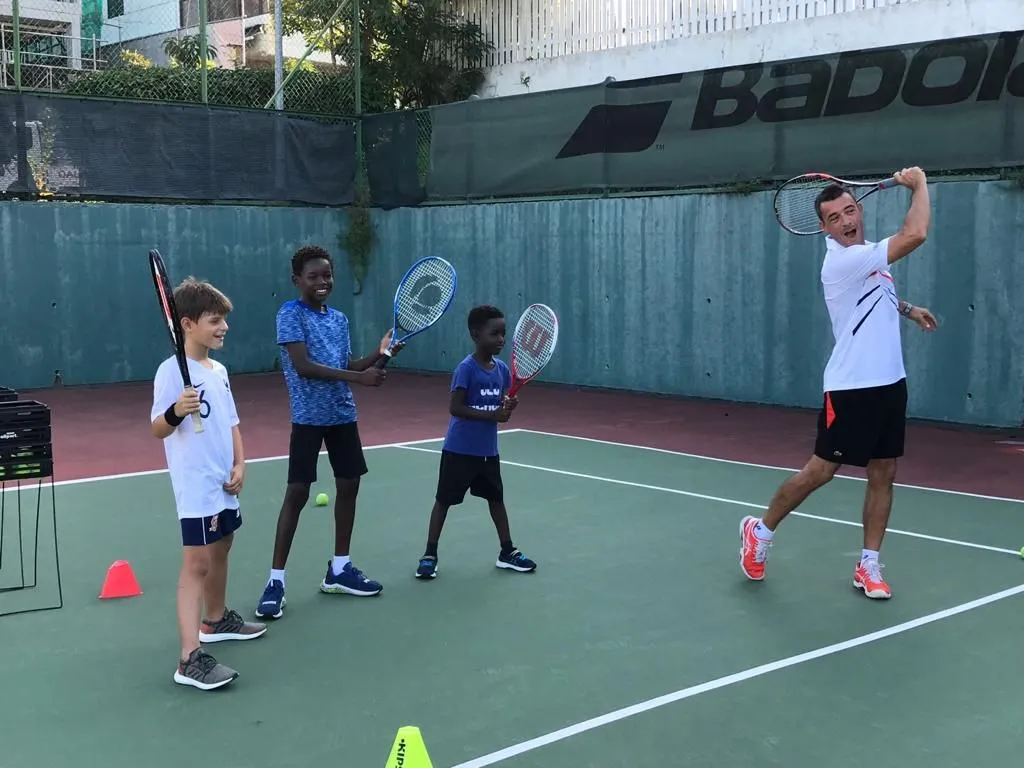
Fifteen hours bought at once, not fifteen decisions.
An hour booked week by week is an hour that can always be moved, and a plan that can always be postponed. The block removes that question, and the coaching changes because of it.
- The coach can plan past the next session — with fifteen hours in hand, a technical change can be introduced in October and still be under repair in November. Nobody has to rush a correction into a single hour.
- The group stays the same — the same five players all the way through. They learn each other's game, they rally properly rather than politely, and the level of the session rises with them.
- Progress is measured, not felt — assessments happen along the way, in the same terms each time, so a parent sees what actually moved rather than being told it went well.
- The fifteen hours are guaranteed — only the time the group spends on court counts towards the block. A session cut short is not a session spent.
September to July, on the school calendar.
The Academy runs from September to July, following the International French School calendar. Blocks are counted in hours rather than in weeks, so a family arriving in January joins the group and books fifteen hours from there — the season is not a door that closes in September.
It also means the Academy pauses when the school pauses. Families who want to keep playing through a break usually add a holiday camp, which is built for exactly those weeks, or book ordinary hourly sessions near home.
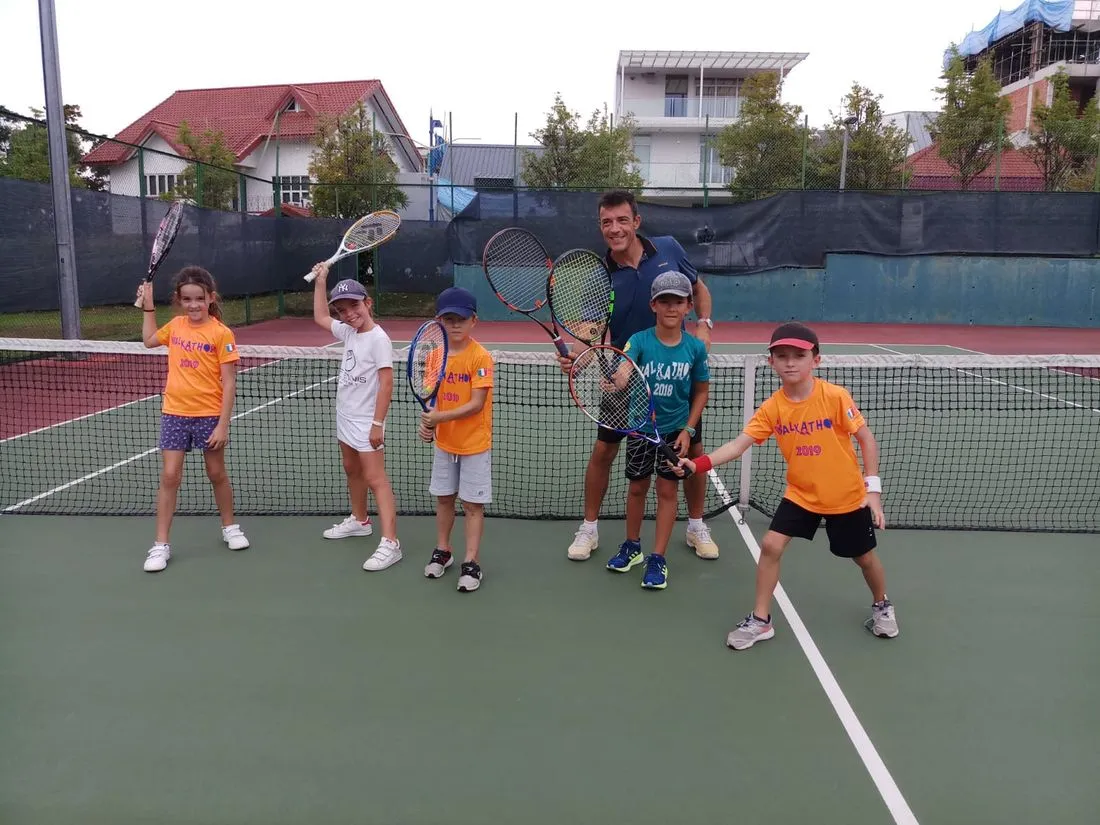
Five players, and no more.
Five is the ceiling, and it is the number the whole format is built around. Above it, a coach spends the hour managing a queue instead of coaching a player.
Ages 4 to 10
Players follow the Galaxy Tennis progression — white, purple, red, orange then green — where the court and the ball grow with the child. The Academy gives that progression the continuity it needs to actually advance.
Ages 11 to 17
The teen programme is built around how adolescents actually train: it takes their lifestyle and their expectations seriously, and it works because they feel invested in the game rather than enrolled in it.
Groups are formed by age and by level, not by age alone. A ten-year-old who started last term trains where they belong, not where their birthday says.
SGD 590 for fifteen hours.
Per player, for the full block. That is a little under SGD 40 an hour for coaching in a group of five, with the same coach throughout and assessments included.
Two things are worth reading before you book, because they are the terms that make the format work. Only the time the group spends on court is counted — the fifteen hours are guaranteed, and nothing else is billed against them. And a missed session is not refunded or made up: the slot is held for a group of five across the whole block, so an empty place cannot be resold or moved. It is the trade-off that keeps the group together, and we would rather you knew it now than discovered it in March.
Registration is complete once payment is made. Everything else — hourly lessons, camps, first lessons — is on the pricing page.
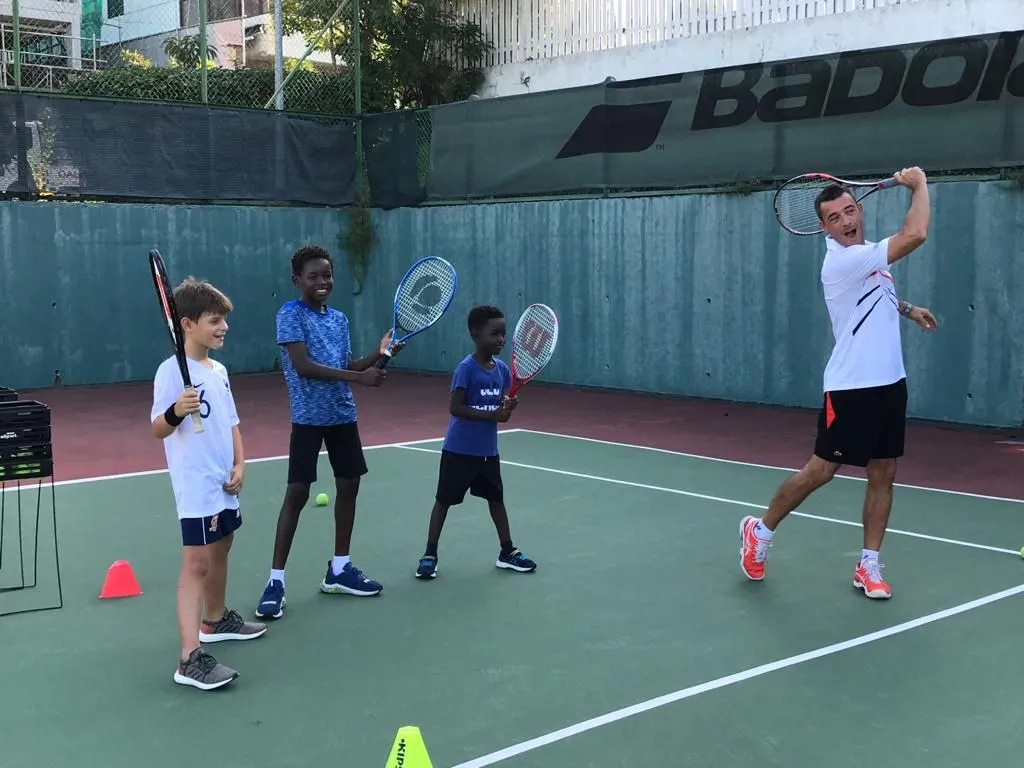
What an Academy hour looks like.
The same method as every other Pure Sport session — biomechanics first, then the shot. What the block adds is the right to come back to it next week.
What parents ask about the Academy.
How many players train in an Academy group?
Five, at most. Groups are built by age and level, so a player is always training alongside others who push them without leaving them behind.
When does the Academy year run?
From September to July, following the International French School calendar. Blocks are booked as fifteen hours, so a family can join along the way rather than only in September.
Where does the Academy train?
In the Serangoon Gardens area. This is the one programme tied to a fixed base — every other Pure Sport format comes to your condo or club court, across 20 neighbourhoods.
What happens if my child misses a session?
Only the time the group spends on court is counted, and a missed session is not refunded or made up. The block is reserved for a group of five for the whole run, which is what keeps it a group rather than a series of separate lessons.
How is the Academy different from weekly lessons?
A weekly lesson is booked hour by hour and can move with your term. The Academy is booked as a fifteen-hour block with the same group and the same coach throughout, which is what makes a progression plan possible. Both are on the pricing page.
Five per group means places are finite.
Tell us your child's age and where they are in their tennis, and we will say honestly whether there is a group that fits — and what to do if there is not one yet.
